
 EN
EN
 ar
ar bg
bg hr
hr cs
cs da
da nl
nl fi
fi fr
fr de
de el
el hi
hi it
it ko
ko no
no pl
pl pt
pt ro
ro ru
ru es
es sv
sv tl
tl iw
iw id
id lv
lv lt
lt sr
sr sk
sk sl
sl uk
uk vi
vi et
et hu
hu th
th tr
tr fa
fa ms
ms hy
hy ka
ka ur
ur bn
bn mn
mn ta
ta kk
kk uz
uz ku
ku
weir flow meter Domestic Manufacturing
Kingmach weir flow meter Domestic Manufacturing can serve both short-term testing and long-term operation. During commissioning, the project team may need to confirm that the weir section is stable, the water head reading responds sensibly, and the data path records the correct point. During long-term use, the owner may care more about trends, maintenance events, seasonal changes, and abnormal flow patterns. The same measuring point must support both phases. That means the handover file should include drawings, photographs, channel notes, cleaning access, first stable readings, data channel names, and maintenance instructions. If the point is later repaired or cleaned, the maintenance note should remain visible beside the curve. This keeps the record useful after the original installation team has left. Handover quality has a direct effect on future trust. New operators should know why the point was installed, where the water comes from, what conditions make the reading unreliable, and how to recognize a channel problem. Photos before and after cleaning, a simple access route, and a short note about expected seasonal behavior can prevent confusion years after installation. Good documentation turns one monitoring point into a durable operating asset rather than a forgotten instrument record. It also makes later audits faster and more consistent.
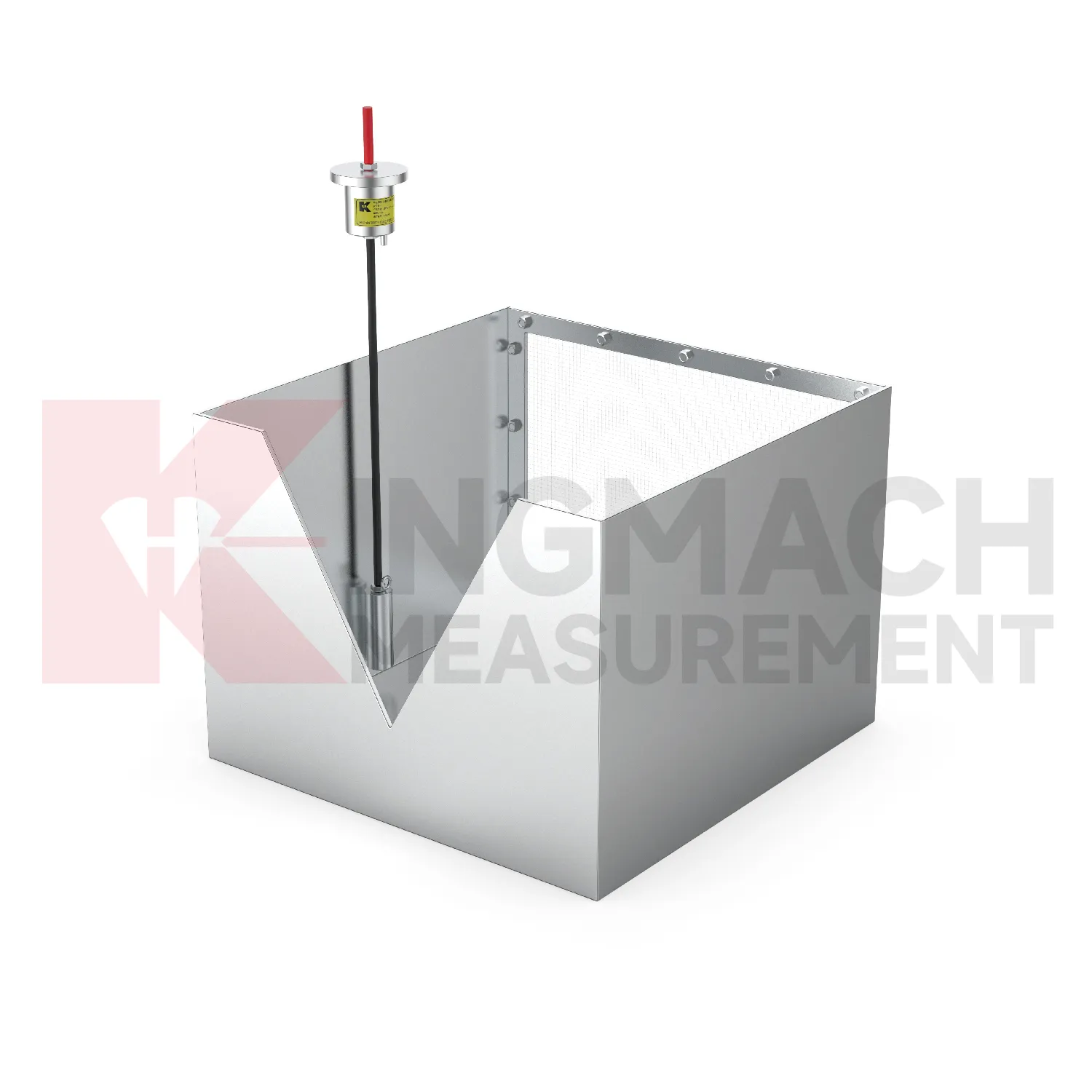
Application of weir flow meter Domestic Manufacturing
Water supply and treatment facilities can use Kingmach weir flow meter Domestic Manufacturing to monitor flow through open channels, process by-pass points, or controlled discharge sections. The goal may be operating balance, inflow observation, outflow checking, or maintenance verification. The record becomes useful when it is tied to pump status, valve or gate operation, cleaning schedules, rainfall, and process events. A flow point should be placed where the water condition is stable enough to represent the channel. If foam, sediment, turbulence, or downstream water affects the control section, the data should be reviewed carefully. Good flow monitoring helps operators compare actual water movement with the expected operating state and quickly notice conditions that need field checking. In treatment work, timing matters because process changes, cleaning cycles, storm inflow, and maintenance by-pass events can all alter channel behavior. A dated record helps staff explain why flow changed and whether the change matched plant activity. It can also support handover between shifts, because the next operator sees not only the curve but the event that shaped it. That makes routine review more disciplined and less dependent on verbal memory. It also helps maintenance staff plan cleaning before reduced conveyance affects routine operation. across different work shifts.
The future of weir flow meter Domestic Manufacturing
Digital handover will be a stronger future requirement for Kingmach weir flow meter Domestic Manufacturing. A flow point may remain in operation for years, long after the installation team has left. Future handover records should include the purpose of the point, channel photographs, weir geometry notes, water head reference, cable route, data channel, cleaning access, and first stable record. This context helps later reviewers understand whether the point measures drainage, irrigation, seepage, process water, or another water path. A good handover file keeps the flow curve meaningful through staff changes, repairs, and changes in site operation. Future systems should make that file easy to update after every important field action. If a crew cleans sediment, replaces a cable, adjusts a reference, or changes a platform channel, the note should stay with the station history. This turns handover from a one-time folder into a living record that protects long-term interpretation. It also helps new teams avoid repeated investigation.
Care & Maintenance of weir flow meter Domestic Manufacturing
Routine inspection of Kingmach weir flow meter Domestic Manufacturing should connect field condition with data quality. The inspector should look at the crest, approach channel, downstream condition, sensing area, enclosure, cable route, labels, and recent data trend. If the point is difficult to access safely, that risk should be part of the maintenance plan. The inspection record should be short but specific: what was seen, what was cleaned, what changed, and whether the next reading looked normal. This keeps the flow monitoring point useful through storms, sediment events, construction changes, and long-term operation. Handover records should make the location understandable for the next crew. Site photos, access notes, nearby landmarks, cleaning tools, and known seasonal issues can prevent repeated diagnosis work. When operators change, a clear maintenance note helps preserve continuity, especially at remote channels where small changes in the control section may not be obvious from the office trend alone. Simple maps help too.
Kingmach weir flow meter Domestic Manufacturing
A strong Kingmach weir flow meter Domestic Manufacturing record supports more than one team. Designers may care about hydraulic behavior, operators may care about regulation, maintenance staff may care about debris and cleaning, and owners may care about water accounting and risk. The record is easier to use when it states where the water passes, how the head is read, what can disturb the flow, and how the data supports decisions. Avoiding product and parameter lists makes the message clearer. The buyer needs to understand how the measurement will work in the channel, not memorize a specification table. A weir point also needs safe routine access. If staff cannot reach the crest, enclosure, or sensing area during wet weather, the project may collect data but struggle to maintain confidence in it when the record is most important. Designers, operators, maintenance staff, and owners may read the same curve, so the record needs clear site conditions, inspection notes, and action history in plain engineering language.
FAQ
Q: What should buyers define before ordering?
A: Define the water path, measuring purpose, channel condition, access, data review method, maintenance plan, and related site records.
Q: Can one flow point answer every water question?
A: No. Each point should represent a defined channel or discharge path and should be linked to the engineering question it supports.
Q: Why avoid product and parameter lists in the page?
A: Readers need to understand how the flow point works in the channel, how it is maintained, and how the data supports decisions.
Q: What makes long-term flow data reliable?
A: Stable installation, clean hydraulic control, consistent maintenance, clear units, point photos, and visible repair history make long-term data reliable.
Q: How should flow data be reported?
A: Reports should show the measured channel, time period, flow trend, related site conditions, inspection notes, and any action taken. For water accounting or resource management, the same section, reference point, and maintenance discipline make seasonal and operational comparison reliable.
Reviews
Andrew Lee
The visualization software is intuitive and powerful. It helps us analyze monitoring data efficiently.
Christopher Martinez
Very satisfied with the readouts & data loggers. User-friendly interface and supports multiple sensor inputs.
Latest Inquiries
To protect the privacy of our buyers, only public service email domains like Gmail, Yahoo, and MSN will be displayed. Additionally, only a limited portion of the inquiry content will be shown.
Olivia***@gmail.comUnited States
Hello, we are currently sourcing high-precision strain gauges and load cells for a bridge monitoring...
Mia***@gmail.comNetherlands
Dear team, we are interested in your readouts & data loggers compatible with multiple sensors. Do yo...